AI
Whether in medical technology, mechanical engineering or marketing, artificial intelligence, or AI for short, is being talked about more and more everywhere these days. But what is it exactly? And what is it good for?

Whether in medical technology, mechanical engineering or marketing, artificial intelligence, or AI for short, is being talked about more and more everywhere these days. But what is it exactly? And what is it good for?
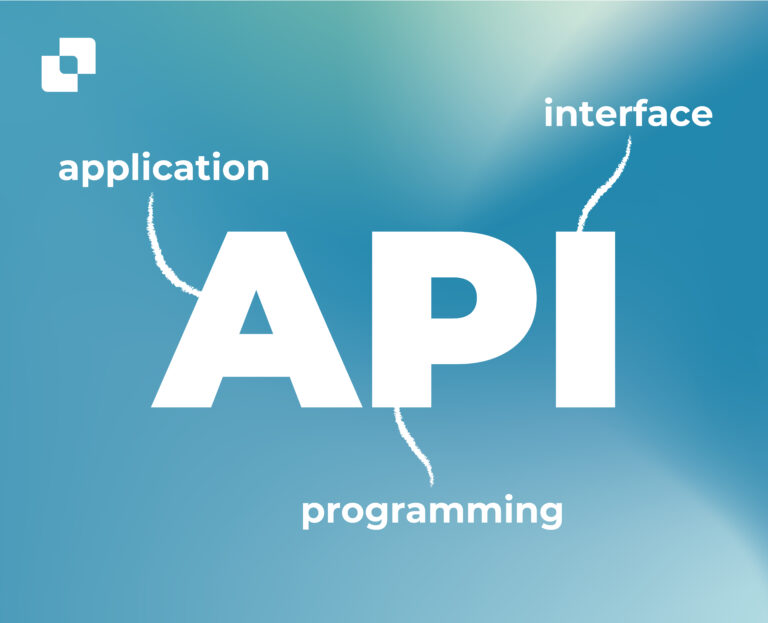
The abbreviation API stands for Application Programming Interface and refers to an interface that enables different software applications to communicate with each other and exchange data.

In the digital world, bots have become an indispensable tool that supports businesses, developers, and even end-users. But what exactly is a bot, and how does it work? In this article, we take a look at bots, their different types, and how they are revolutionizing the way businesses and users operate.
BPMN (Business Process Model and Notation) is a standardized graphical notation for modelling business processes. It is used to visually represent processes and workflows within a company or organization.
The term cloud (German: “Wolke”) is short for cloud compution and refers to an infrastructure for the provision of IT services and resources that are accessible via the internet.

A creditor in finance is also called a creditor who has a claim or a receivable. Any individual or legal entity, as well as any company that supplies goods or provides services, becomes a creditor.

The term debtor is derived from Latin and literally means “debtor”. Thus, debtor is another term for a debtor from delivery and/or services. In practice, it is often the customers of a company who buy goods on account or use services for which they have not yet paid. However, a company or a legal entity under public law can also be a debtor.

The abbreviation DMS stands for Document Management System. It is basically a system and software that is used to manage, store and track electronic documents and images.

EDI stands for “Electronic Data Interchange”. It is the computer-based exchange of standardised business data between different companies.

The abbreviation ERP stands for “Enterprise Resource Planning”. It refers to a software that supports companies in resource planning.
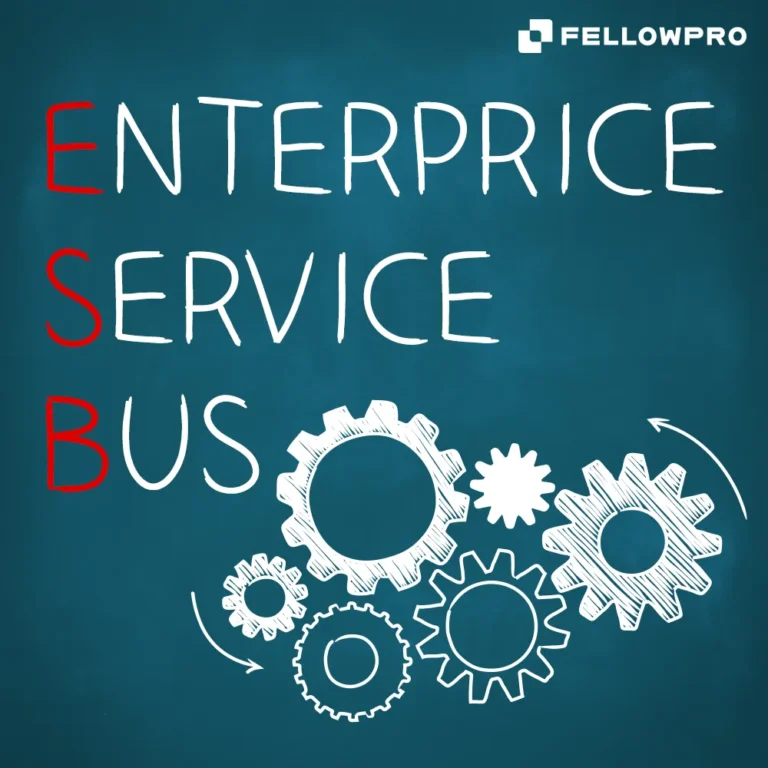
ESB stands for Enterprise Service Bus and refers to a software architecture model that facilitates the integration of different applications and systems in a corporate environment.

The General Data Protection Regulation (GDPR) is a regulation of the European Union. The GDPR is a standardization of data protection in Europe. I
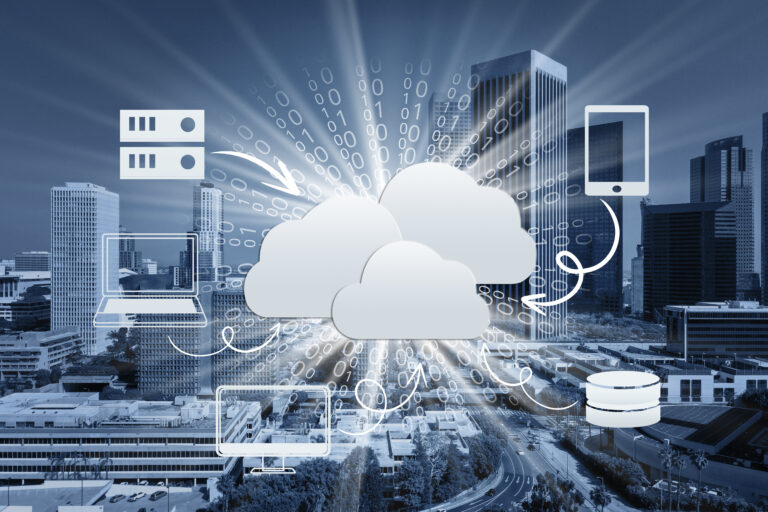
IaaS (Infrastructure as a Service) is a cloud computing model in which basic IT infrastructures such as computing power, storage space, network resources and virtual machines are provided via the internet.

Identity and Access Management (IAM) is a core component of modern IT security strategies.

Low-code describes a method or platform that allows applications or software solutions to be developed with a minimal amount of traditional, hand-written code.
Machine learning (ML) is a forward-looking tool that helps companies to automate processes, make more accurate predictions and create personalised experiences.
NLP is a key technology in the field of AI that helps companies automate processes, improve customer experiences, and efficiently utilize information from texts.
No-code describes a method or platform that can be used to create applications or software solutions without the need for programming skills.
The term “on-premises” (also called “on-prem”) refers to an IT infrastructure that is operated locally on a company’s premises.

Optical Character Recognition (OCR) is a pioneering technology that makes manual text recognition obsolete and significantly increases efficiency in various industries.
Platform as a Service (PaaS) is a cloud computing model that provides a complete development and deployment environment in the cloud.
IDP What is “PPS”? PPS stands for Production Planning and Control System. This is a computer program/software tool designed to help companies plan, control and monitor production, as well
Return on investment (ROI) is a key concept in the world of corporate finance. This indicator serves as a benchmark for the profitability of investments and plays a decisive role in strategic decisions made by companies.
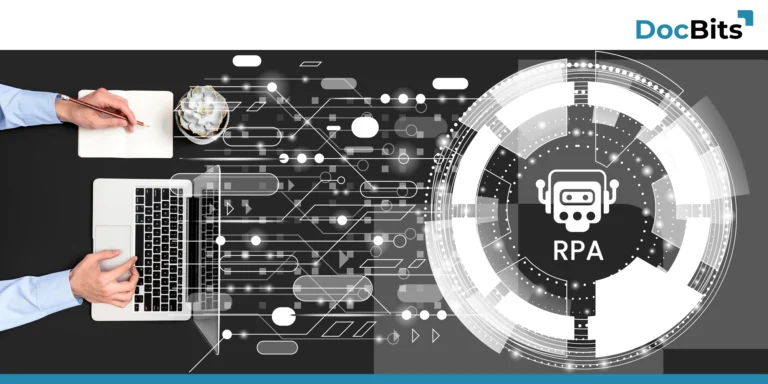
Robotic Process Automation (RPA) marks a milestone in the automation of business processes. RPA refers to the use of software robots or “bots” that automate repetitive tasks in business processes in order to increase efficiency and free up human resources for more value-adding activities.
SaaS (Software as a Service) is a cloud computing model in which software applications are provided via the Internet and hosted by a third-party provider.

Small Language Models (SLM) are compact, resource-saving variants of large language models such as GPT or BERT.
SQL (Structured Query Language) is a database language that is used to manage and query relational databases. With SQL, users can save, retrieve, change and delete data without the need for in-depth programming knowledge.

SSL (Secure Sockets Layer) and TLS (Transport Layer Security) are cryptographic protocols that enable secure and encrypted communication between two systems, e.g. between a web browser and a server. TLS is the further development of SSL and offers stronger security.

UI, short for user interface, refers to the user interface through which a person interacts with a digital product, such as a website, an app or software.

Validation Validation in data processing: importance and advantages Validation plays a critical role in data processing to ensure the quality, accuracy and reliability of data. In this glossary article,

You are currently viewing a placeholder content from Vimeo. To access the actual content, click the button below. Please note that doing so will share data with third-party providers.
More InformationYou are currently viewing a placeholder content from YouTube. To access the actual content, click the button below. Please note that doing so will share data with third-party providers.
More InformationYou need to load content from reCAPTCHA to submit the form. Please note that doing so will share data with third-party providers.
More InformationYou are currently viewing a placeholder content from Facebook. To access the actual content, click the button below. Please note that doing so will share data with third-party providers.
More InformationYou are currently viewing a placeholder content from Instagram. To access the actual content, click the button below. Please note that doing so will share data with third-party providers.
More InformationYou are currently viewing a placeholder content from X. To access the actual content, click the button below. Please note that doing so will share data with third-party providers.
More Information