

Infor Document Management (commonly referred to as Infor IDM) offers a streamlined and efficient solution for managing documents by enabling users to upload files effortlessly and classify them automatically. This powerful functionality not only saves valuable time but also guarantees that all documents are properly organized and categorized according to predefined criteria, enhancing the overall document management process. By minimizing manual intervention, Infor IDM helps companies maintain consistent and accurate documentation, thereby reducing errors and boosting productivity.
In this blog post, we will take a closer look at how to utilize the DocBits email interface to send documents directly to Infor DM (IDM) and have them automatically classified. This process simplifies the workflow, allowing you to manage incoming documents efficiently without the need for complex manual steps. The integration between DocBits and Infor IDM harnesses advanced automation features, ensuring that your documents are not only delivered seamlessly but also immediately sorted and stored in the appropriate categories.
We will guide you through the step-by-step process of setting up and using the DocBits email interface, illustrating how this integration can revolutionize your document handling. From improved accuracy and reduced processing time to enhanced data management capabilities, this method can help your organization achieve new levels of efficiency and operational excellence. Dive in to learn how you can leverage these tools to optimize your document workflows and experience the benefits of a well-organized, automated system.
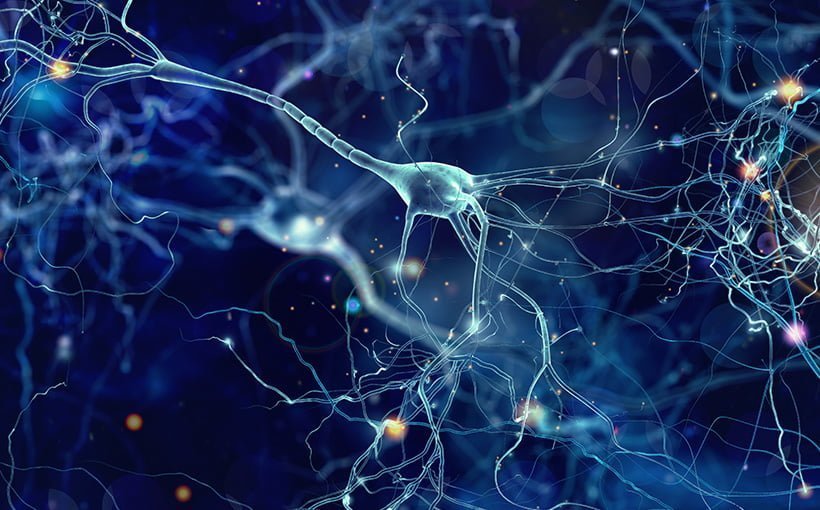
A neural network is a sophisticated computer system designed to mimic the structure and functioning of the human brain. It comprises numerous interconnected nodes, also known as neurons, that collaborate in layers to process and analyze information. These networks operate by passing data through multiple layers, with each layer extracting different features or details from the input. This layered approach allows the network to develop a comprehensive understanding of complex data patterns and relationships.
One of the most powerful aspects of neural networks is their ability to learn and adapt over time. Through a process known as training, these systems can refine their algorithms based on exposure to large datasets. This learning capability enables neural networks to recognize intricate patterns and make sense of information in a way that becomes more accurate and effective as more data is processed. The more extensive the training data, the better the network becomes at generalizing new, unseen information.
Due to their pattern recognition prowess, neural networks are particularly well-suited for tasks that involve image recognition, voice processing, natural language understanding, and classification problems. For example, in image recognition, a neural network can analyze an image by identifying and categorizing different elements, such as shapes and colors, and matching them to learned categories. This allows it to distinguish between different objects or recognize faces with impressive accuracy. Neural networks have become the backbone of many AI applications, driving innovation in fields ranging from healthcare diagnostics and autonomous driving to language translation and predictive analytics. Their ability to process vast amounts of data with high efficiency has made them indispensable for solving complex problems and advancing modern technology.
Image credits: Header- & featured image by jannoon028 on Freepik
Share:
You are currently viewing a placeholder content from Facebook. To access the actual content, click the button below. Please note that doing so will share data with third-party providers.
More InformationYou are currently viewing a placeholder content from Instagram. To access the actual content, click the button below. Please note that doing so will share data with third-party providers.

More InformationYou are currently viewing a placeholder content from X. To access the actual content, click the button below. Please note that doing so will share data with third-party providers.
More Information